Is It Broken or Just a Sprain? How to Tell
Your son comes back from football limping. Your mother misses the last step outside the building and her ankle balloons. You slip on a wet bathroom floor, put a hand out, and by evening the wrist is fat and sore. Whichever it is, the question is the same. Is something broken, or is it a sprain that'll settle with rest?
The honest answer is that you often can't tell by looking. Doctors can't always tell either, which is why they order an X-ray when there's any doubt. Some signs do tip it one way or the other, though. And a few mean you should be on your way to a hospital instead of reading this.
When should I go straight to hospital?
Call 108 or go to a hospital now if:
- bone is showing, or there's an open wound over the injury
- the hand or foot below the injury is cold, pale, blue or numb
- they hit their head, or have pain in the neck or back
- the pain is severe and painkillers aren't touching it
- the swelling keeps getting tighter, with pain when they move their fingers or toes
- the arm or leg is clearly bent out of shape
Go to hospital as well for any possible hip, pelvis or thigh injury, especially if it's an older person who can't stand after a fall, and after a road accident or a fall from a height. A big impact can hide other injuries that don't show straight away.
Everything below is for the more ordinary case, where it hurts and it's swollen but none of the above applies.
What's the difference between a sprain and a fracture?
A fracture is a break or a crack in a bone. A sprain is a stretched or torn ligament, one of the tough bands that hold the bones of a joint together. (A strain, which people often mix up with a sprain, is a muscle or tendon.)
They happen the same way, from a twist, a fall or a hand put out to stop yourself. Both swell and bruise, and both can hurt a lot. A bad sprain can be more painful than a small fracture. Sometimes it's both, because a ligament can pull a small flake of bone away where it's attached.
How do I know if a bone is broken?
These point towards a fracture:
- pain right on the bone when you press gently, in one spot, rather than a general ache around the joint
- a bump, bend or angle that wasn't there before (compare with the other side)
- not being able to put any weight on it, or not managing a few steps even with a limp
- not being able to use the hand to hold a cup or turn a doorknob
- pain that's no better, or worse, after two or three days of rest
A snap or crack at the moment it happened is a hint. Ligaments can pop too, though, so it isn't proof.
One that's often missed is a break in the wrist just below the thumb, after a fall onto an outstretched hand. The wrist doesn't look too bad and the person can still use it, so everyone calls it a sprain. If there's pain in the small hollow at the base of the thumb, tell the doctor.
Can you still move it if it's broken?
Yes, quite often. "If you can move it, it isn't broken" is one of the most common things we hear, and it's wrong. People walk on cracked foot bones and use a fractured wrist for days before anyone checks. Being able to move it makes a bad break less likely, and that's all. The amount of swelling and the colour of the bruise don't settle it either.
Children are a case of their own. Their bones are softer and can bend or crack partway, and an injury near a growth plate needs proper care. A child who won't use an arm, or is still limping the next day, should be seen even if nothing looks swollen.
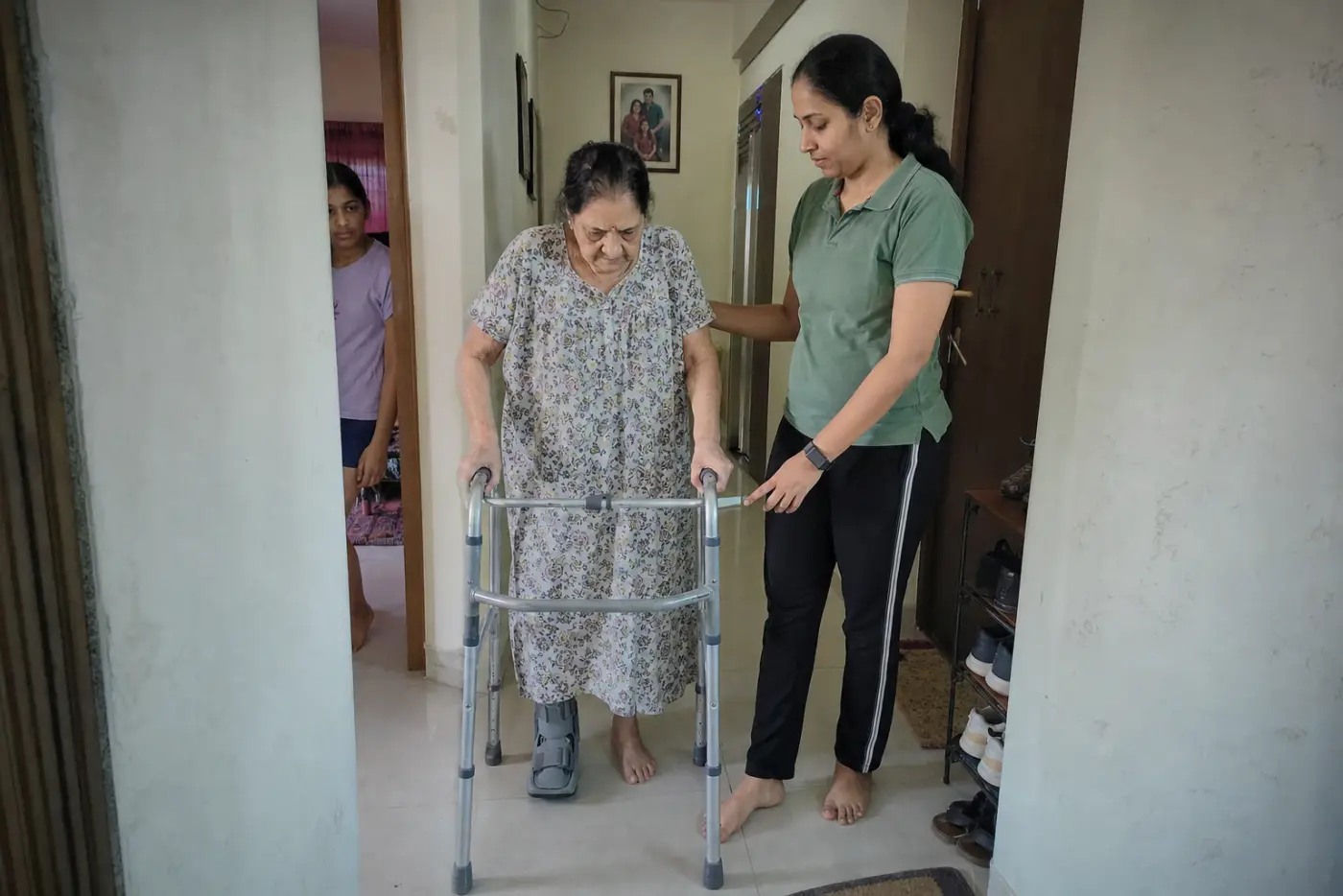
Older people break bones more easily because bones thin with age, and a simple fall onto the hand, shoulder or hip is enough to do it. Pain that hangs on after a fall in an older parent deserves an X-ray.
What should I do for it today?
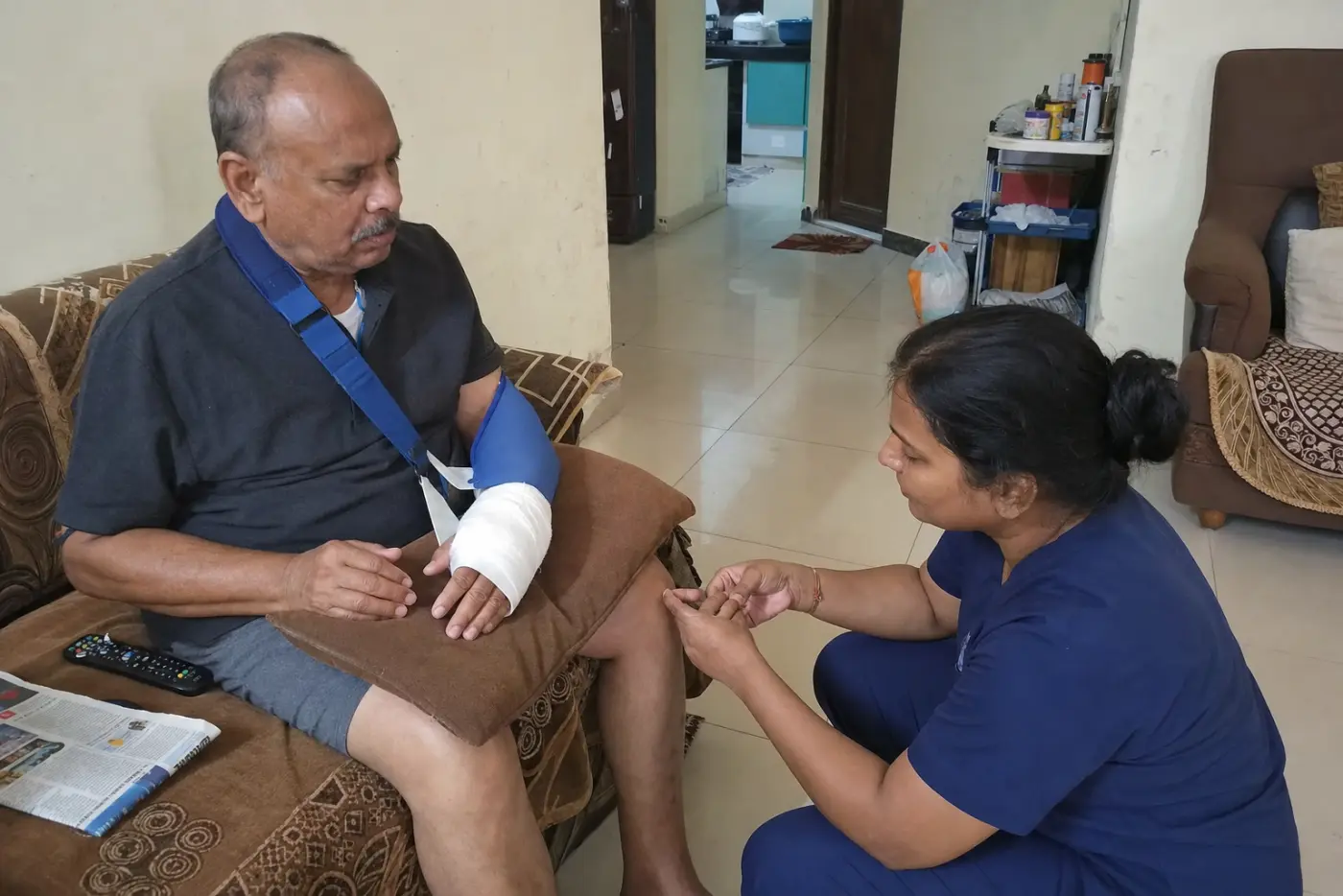
Rest it, and don't try to walk it off or test it by moving it hard. Hold a cold pack or a packet of frozen peas wrapped in a thin cloth against it for 15 to 20 minutes at a time, a few times through the day, never straight on the skin. Keep it raised on pillows. Take off rings, bangles, toe rings and anklets on that side now, before the swelling makes it hard. An arm can rest in a sling or a folded dupatta, and an ankle on a pillow.
In a lot of Indian homes the first instinct is to massage it with warm oil, or take it to the local bone-setter. Please hold off until it's been X-rayed. If the bone is broken, rubbing or pulling on it can move the broken ends and make things worse.
For pain, use a painkiller the person has taken safely before, or ask a doctor or pharmacist, especially for older people and anyone on blood thinners or with kidney or stomach problems.
Do I really need an X-ray?
If any of the fracture signs fit, yes. An X-ray is the only way to know for sure, and the answer changes the treatment. A sprain usually needs support and then gradual movement. A fracture may need a cast for weeks, and a break that's left alone can heal in the wrong position.
Very thin cracks sometimes don't show on the first X-ray. If the doctor still suspects one, they'll usually treat it as a fracture and repeat the X-ray a week or two later. There's more on that in our post on hairline fractures and healing time.
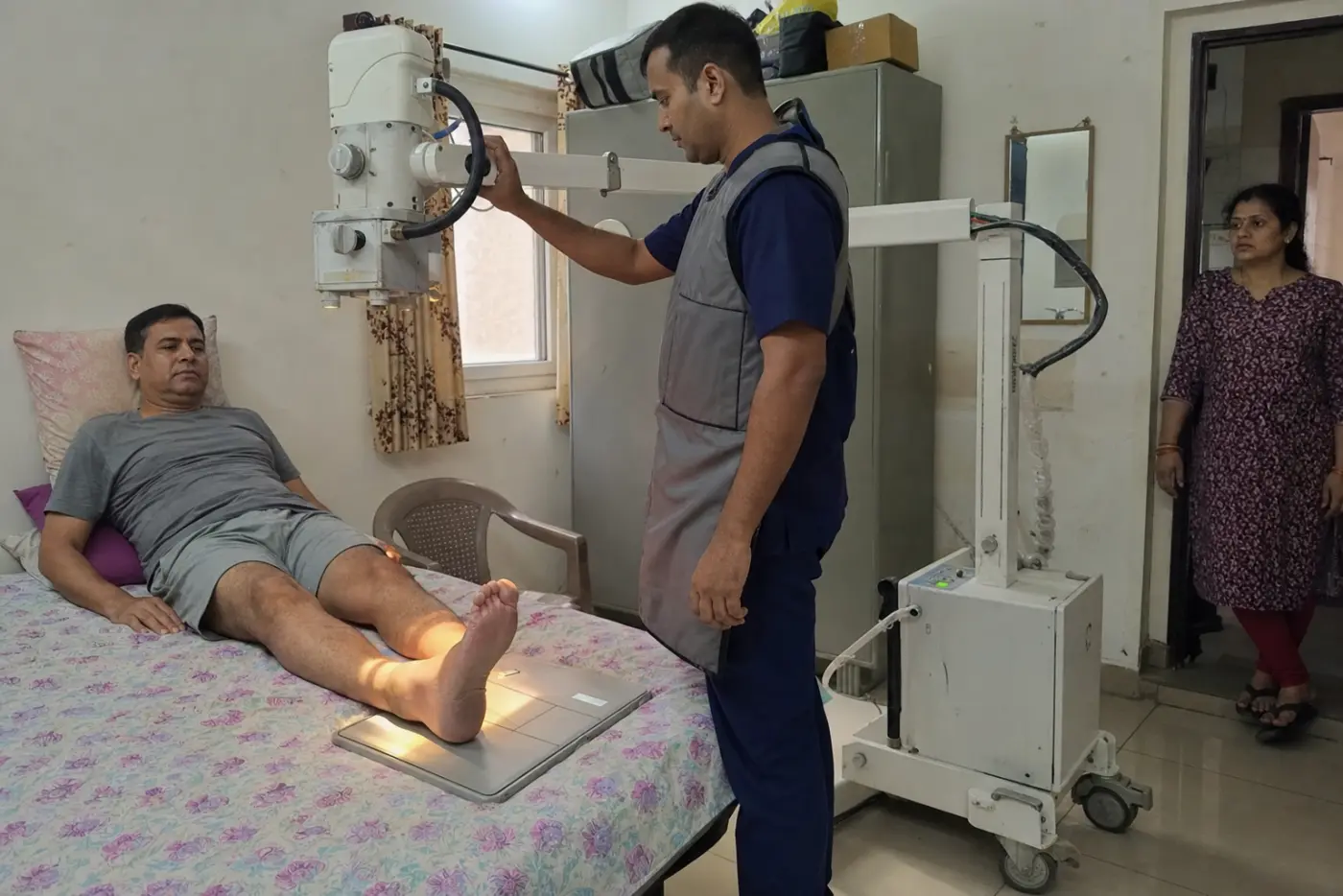
You don't always need a hospital for the X-ray. Wrists, hands, ankles and feet are among the X-rays that work best at home, because they need little power and are easy to position on a bed. We've explained how a home X-ray compares with a hospital one if you want the detail.
Can a doctor check it without going to hospital?
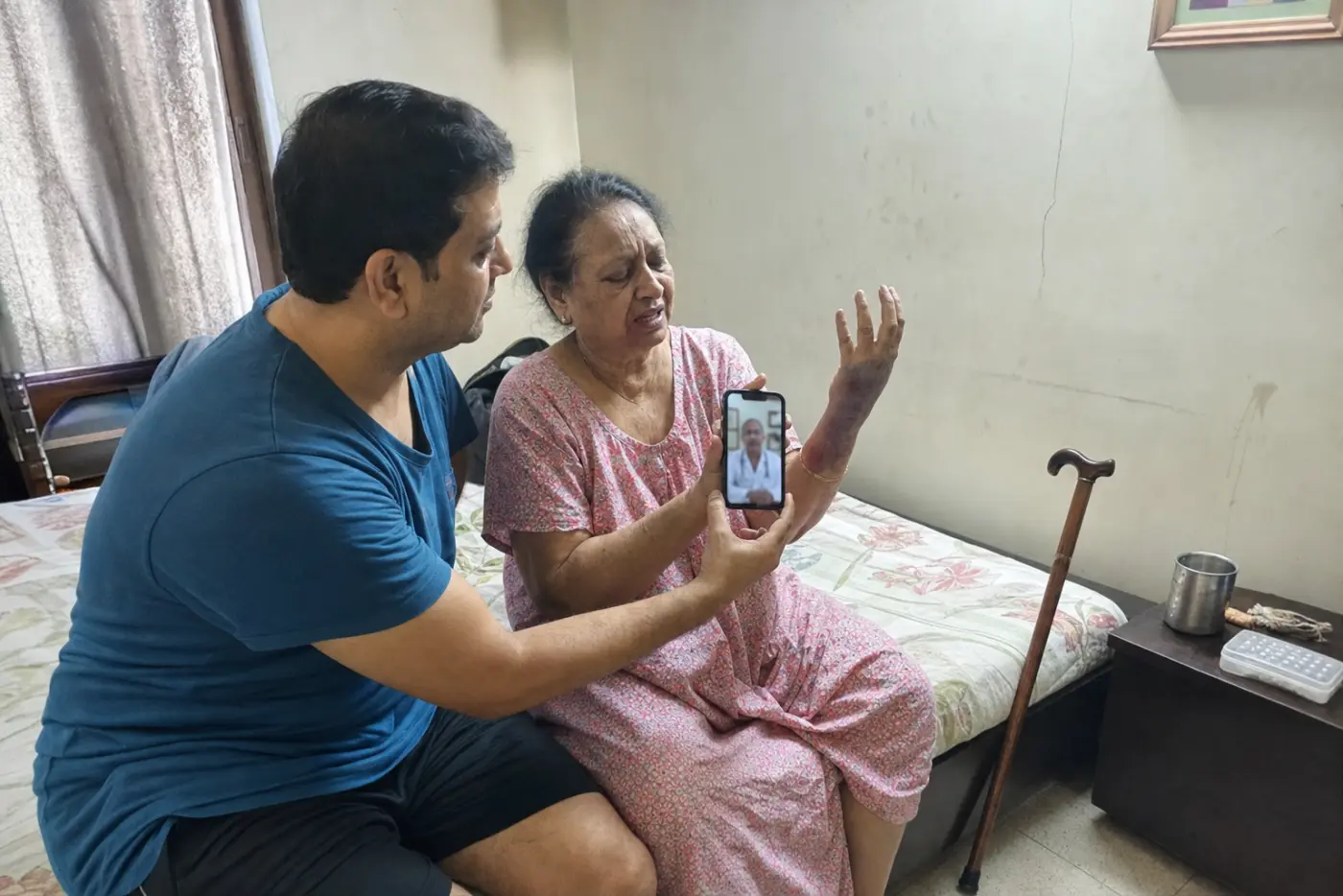
In Bangalore and Pune, yes. Our fracture care at home starts with a doctor's video call, any time between 8am and 8pm. The doctor looks at the injury on camera, asks how it happened and checks for the warning signs above. If it needs an X-ray, a technician brings a portable machine to the house. An orthopaedic doctor then reads it and decides what happens next, whether that's no fracture, a cast at home, or a hospital.
If your own doctor has already asked for an X-ray, you can book an X-ray at home in Bangalore or in Pune on its own.
How long does a sprain take to heal compared with a fracture?
A mild sprain often feels much better within a couple of weeks. A bad one can take longer than a small fracture. Most simple wrist and ankle fractures spend about six weeks in a cast, and older bones take longer. If it does turn out to be broken and ends up in plaster, our guide on looking after a plaster cast at home covers the first few weeks.
Questions that come up a lot
Can you walk on a broken ankle?
Sometimes, with pain. Being able to walk doesn't rule out a fracture. If you can't put weight on it, or the pain is right on the bone, it needs an X-ray.
Can a sprain be worse than a break?
It can hurt as much or more, and a bad sprain can take longer to heal than a small fracture. That's why the amount of pain isn't a reliable way to tell them apart.
How long should I wait before getting an X-ray for a sprain?
Don't wait if there's pain on the bone, a change in shape, or you can't bear weight. Otherwise, if it isn't starting to improve after two or three days of rest, get it X-rayed.
Seri shares general guidance and isn't a substitute for a doctor. If bone is showing, a hand or foot is cold or numb, there's a head, neck or back injury, or someone can't stand after a fall, call 108.