Hip Fracture Recovery at Home After Surgery
The hospital part of a hip fracture can feel quick. The operation, a few days on the ward, and then the discharge summary is in your hand and your mother is on her way home. The bed that was fine last month is suddenly too low, and nobody is quite sure what she's allowed to do.
This is a general picture of the weeks after. Your parent's surgeon and physio know the details of their operation, and what they say comes first.
What kind of operation did they have?
It's worth knowing, because it changes what's allowed. Some hip fractures are fixed with screws, a plate or a rod that holds the bone together while it heals. Others are treated by replacing the top of the thigh bone, with a partial or total hip replacement. The discharge summary will say which. If it uses words you don't recognise, write them down and ask at the first follow-up.
How soon can they walk after hip surgery?
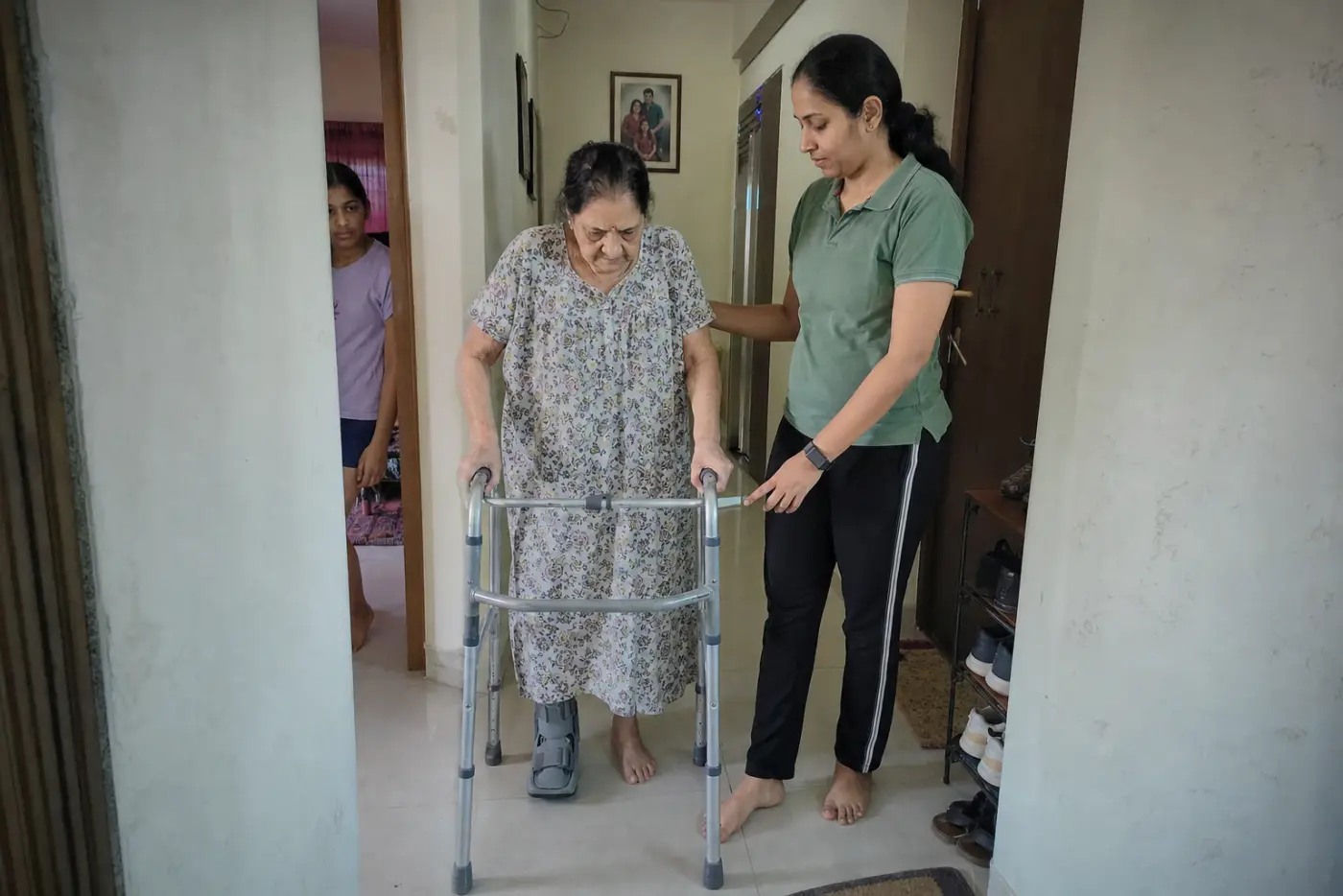
Most hospitals try to get people up and standing, with help, very soon after the operation, often the next day. By the time they come home, many can walk short distances with a walker.
How much weight they can put through the leg depends on the operation, and it should be written on the discharge summary. "Weight bearing as tolerated" means they can put as much weight on it as the pain allows. "Partial weight bearing" or "non-weight bearing" means they need to keep some or all of their weight off it for now, and the physio will show them how. If the summary doesn't say, ask before you leave the hospital.
After a hip replacement, some surgeons give a list of movements to avoid for the first weeks, like bending far forward at the hip, crossing the legs, or twisting on the operated leg. Ask for it in writing if it isn't on the summary.
In older people, days spent lying in bed weaken the muscles fast and make chest infections, pressure sores and blood clots more likely. Short, frequent walks help most, to the bathroom, to the dining table and back to bed.
What are the first few weeks at home like?
Tiredness, pain, poor sleep and a small appetite are all common at first. So is constipation, from the painkillers and from moving less. Water, fruit and fibre help, and tell the doctor if it's been more than two or three days.
Keep the wound clean and dry the way the hospital showed you. Stitches or staples often come out around two weeks after the operation, at the clinic or by a nurse at home. Many people are given blood-thinning injections or tablets for some weeks after hip surgery, to prevent clots. Give them exactly as prescribed, and don't stop early because your parent feels better.
Older people are often muddled for a while after surgery and anaesthesia, and it usually clears. Confusion that's new, or suddenly worse once they're home, is different. It can be a sign of infection, dehydration or a problem with a medicine, and the doctor should hear about it that day.
Many older people eat very little after an operation. Small, frequent meals with some protein in each (dal, curd, eggs, paneer) are easier than three big ones. Ask the doctor before starting calcium or vitamin D supplements.
What does physio at home involve after a hip fracture?
Physio is most of the recovery. It usually starts with simple exercises in bed and in a chair, then standing exercises holding the kitchen counter, longer walks, and stairs if the home has them. The goals are practical, like getting on and off the toilet alone or walking to the bathroom without someone hovering.
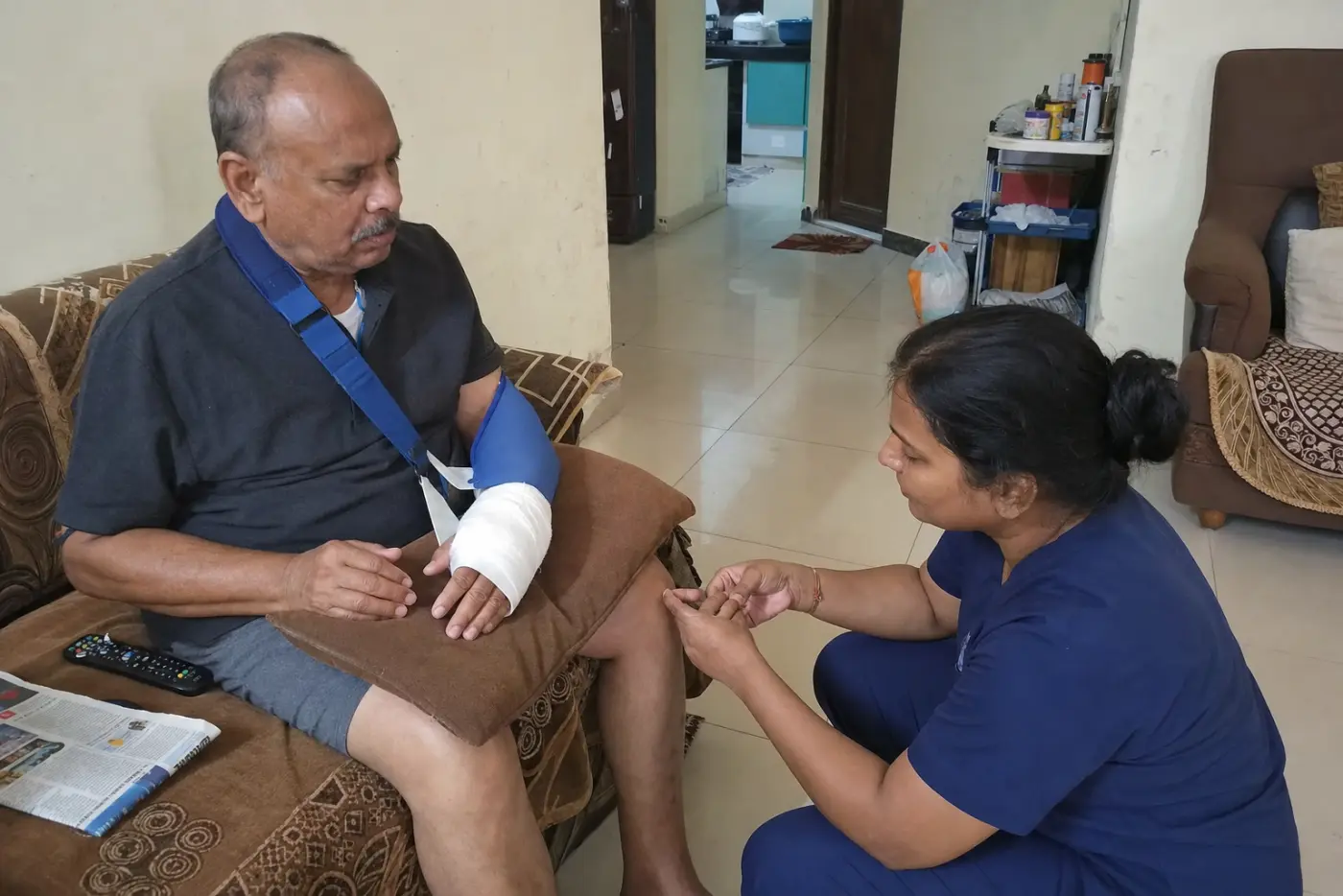
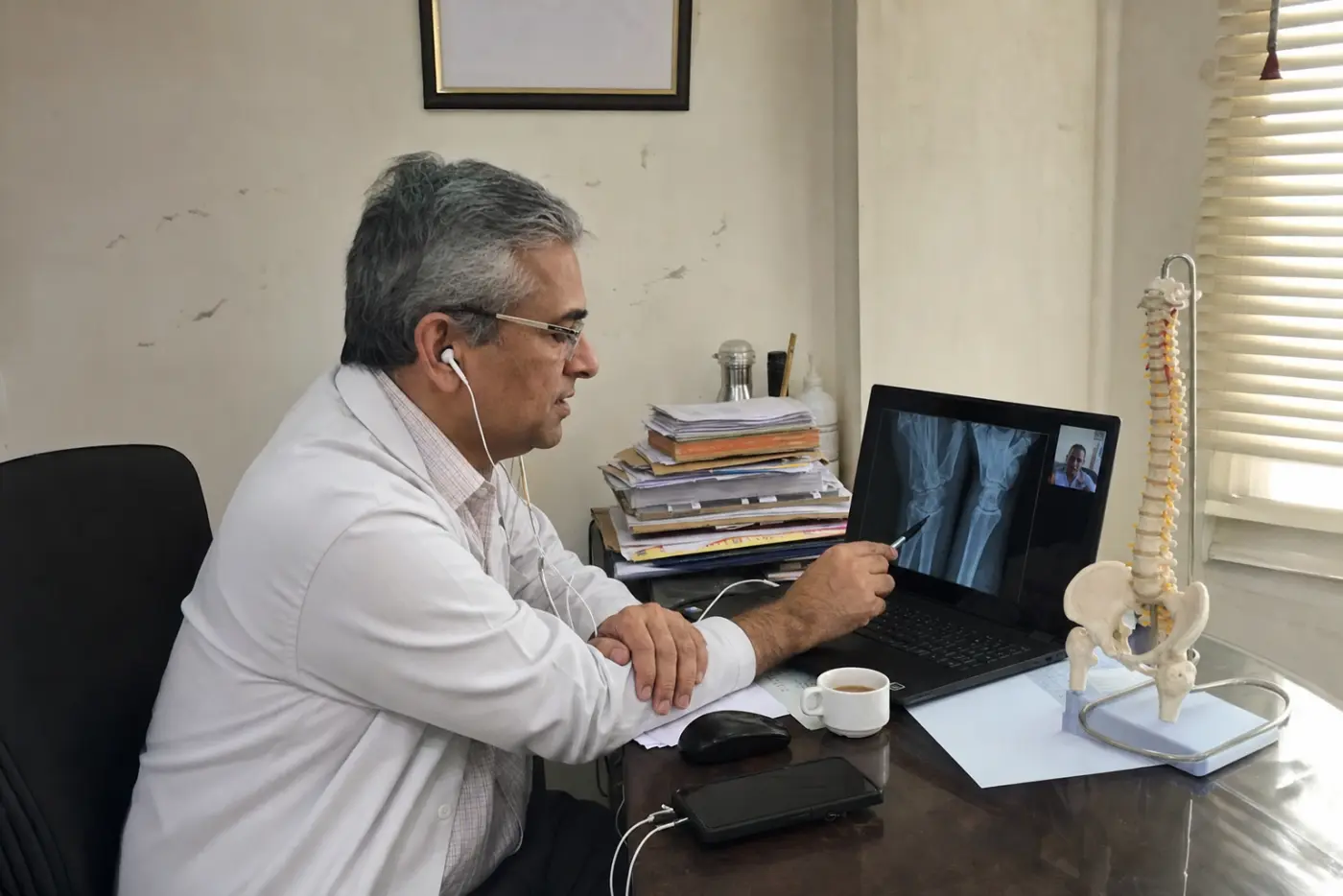
If your parent is in Bangalore or Pune, our fracture care team can take over the follow-up at home once the hospital has done the operation. Book with "Home after hospital" and send the discharge summary and X-rays on WhatsApp. An orthopaedic doctor reviews them first and then sets up physio and check X-rays at home. Physio starts when the orthopaedic doctor says so, the exercises come on WhatsApp after each session, and the physio checks the house for rugs, rails and lighting.
Do they need a follow-up X-ray after hip surgery?
Usually, yes. The surgeon will want at least one check X-ray to see that everything is holding and healing, at a time they set. Many ask for a review around six weeks.
A front view of the hip taken while they lie on their own bed is usually good enough for this, which saves a painful trip. We've written about where home X-rays are as good as the hospital's. If the surgeon has already written the prescription, you can book an X-ray at home in Bangalore or in Pune. Keep the X-ray taken just after the operation, because the doctor will want to compare the two.
Which warning signs after hip surgery need a hospital?
Call 108 for sudden breathlessness, chest pain or coughing up blood, which can mean a blood clot has reached the lungs. Call 108 too for sudden severe hip pain with the leg suddenly looking shorter or turned, especially after a twist or bend, or if they fall again and can't get up.
Call the surgeon or go to a hospital the same day for:
- pain, swelling, warmth or redness in one calf
- a wound that's red, hot, swollen, leaking or opening, or a fever
- new or worse confusion, unusual drowsiness, or not eating and drinking
- burning or pain when passing urine
- red or broken skin on the heels, bottom or lower back
How do I make the house safe after a hip fracture?
A second fall is the thing everyone is trying to avoid, and most of the fixes are cheap.
In the bedroom, the bed should be high enough that when they sit on the edge, their feet are flat on the floor and their knees are roughly level with their hips. A firm chair with armrests is far easier to get out of than a low sofa. A commode chair by the bed for the first weeks means fewer walks to the bathroom at night, and a night light covers the ones they still make. Keep the phone, water and glasses within reach.
The bathroom is where most of the trouble is. Squatting on an Indian-style toilet isn't safe after a hip operation, at least for the first few months, so you'll need a commode chair or a frame that fits over it. A raised seat helps on a western toilet too. Grab rails by the toilet and where they bathe are worth fitting. Bathing while sitting on a sturdy stool, with the bucket and mug within reach, is safer than standing. Keep the floor as dry as you can.
Around the house, take up loose rugs, dhurries and doormats, and clear a path wide enough for the walker. Ask whoever mops to do it while your parent is resting. Slippers should have a back strap and a sole that grips, because loose chappals and socks on tiles cause a lot of second falls. Keep everyday things between waist and shoulder height, so there's no bending low or reaching up.
With stairs and no lift, a ground-floor room for the first few weeks can make life easier.
Why did the bone break so easily?
A hip fracture from a simple fall is a strong sign the bones have thinned. Ask the orthopaedic doctor about a bone density scan and treatment for weak bones, so the next fall is less likely to mean another fracture. It's worth looking at why they fell in the first place, too. Our guide on what to do when an elderly parent falls goes through the usual causes, from medicines to eyesight.
Questions that come up a lot
How long does it take to recover from a hip fracture?
It varies a lot, and many people keep improving for months. Some get back to how they walked before. Others need a stick or walker for longer, or for good.
Can an elderly person recover from a hip fracture at home?
The operation needs a hospital. After that, much of the recovery can happen at home, with physio, check X-rays and doctor reviews coming to the house.
When can they climb stairs after hip surgery?
When the physio says they're ready, usually holding a rail. Physios teach "up with the good, down with the bad", meaning the stronger leg leads going up and the operated leg leads coming down.
Seri shares general guidance and isn't a substitute for the surgeon or physio looking after your parent. Follow their instructions on weight bearing and movement. For sudden breathlessness, chest pain, or a fall after surgery, call 108.