My Elderly Parent Fell: What to Do First, and After
Most falls happen at ordinary moments. Getting up in the night for the bathroom. Stepping onto a wet floor after a bath. Reaching for the steel dabba on the top shelf. The call usually comes from whoever was nearest, the house help or a neighbour, or your father saying "Amma has fallen, she says she's fine, but she can't get up."
If that's happening right now, read the next two sections and leave the rest for later.
My parent just fell. What should I do first?
Don't rush to lift them. Everyone's instinct is to grab them under the arms and pull, and that's the thing most likely to make an injury worse, or hurt your own back.
Kneel down and talk to them. Are they awake and answering you? Breathing normally? If they aren't responding, or their breathing doesn't look right, call 108 straight away and do what the call handler tells you.
If they're awake, ask them to stay still for a minute while you find out what happened. Where does it hurt? Did they hit their head? Can they move their arms and legs? Did they trip, or did they feel dizzy or black out first? That last one matters. A fall that started with a faint or a dizzy spell needs a doctor even if nothing is broken.
When should I call 108 and not move them?
Leave them where they are, keep them still and call 108 if:
- they hit their head and are drowsy, confused, being sick or not making sense
- they have pain in the neck or back, or new numbness or tingling in the arms or legs
- they have pain in the hip, groin or thigh, or can't stand or take weight on one leg
- one leg looks shorter than the other, or the foot is turned outwards
- a bone is showing, there's an open wound over the injury, or a limb is bent out of shape
- the hand or foot below an injury is cold, pale, blue or numb
- the pain is severe and painkillers aren't helping
- they had chest pain or breathlessness, or fainted, before they fell
108 is the emergency ambulance number in both Karnataka and Maharashtra.
While you wait, keep them warm with a blanket or shawl. If there's no neck or back pain, a folded towel under the head is fine. Don't try to sit them up, and don't try to get them into a car or an auto. Moving a broken hip is very painful, and the ambulance crew can move them properly. Don't give them anything to eat or drink until a doctor has seen them, in case they need an anaesthetic. Wetting their lips is fine.
If you can, send someone down to wait at the gate and hold the lift, and put their medicine strips, recent reports and ID in a bag.
How do I help an elderly person get up after a fall?
Only if none of the above applies and they feel ready. Let them rest on the floor for a few minutes first. Then:
- Bring a sturdy chair close to them, one that won't slide. A plastic chair on wet tiles won't do.
- Help them roll onto their side, then onto their hands and knees.
- Let them crawl or shuffle to the chair and put both hands on the seat.
- They bring their stronger leg forward with the foot flat on the floor, push up with their arms and that leg, and turn to sit on the chair.
- They sit for a good few minutes before trying to stand or walk.
Your job is to hold the chair steady and guide them. Let them do the lifting. If they can't manage, don't force it. Put a cushion under their head and a blanket over them, and get help from a neighbour or the building security, or call 108 if they're hurt or have been on the floor a long time. Don't leave them lying there until the morning.
They seem fine. What should I watch for over the next day or two?
Plenty of falls end with a bruise and a fright, but keep a closer eye on them for a day or two anyway.
After any knock to the head, watch for a headache that keeps getting worse, vomiting, unusual sleepiness, confusion, slurred speech, or weakness on one side. Any of these means a hospital straight away. In older people, bleeding inside the head can come on slowly, sometimes days after the fall. If your parent takes a blood thinner, get them checked at a hospital the same day after a head knock, even if they seem completely fine.
Pain in the hip or groin when they walk, or a new limp, should be seen at a hospital. Some people with a small hip fracture can still walk on it, painfully, for a day or two.
Pain on breathing after landing on one side can mean a cracked rib. It should still be checked, even though ribs aren't put in a cast, and breathlessness or coughing up blood means a hospital that day.
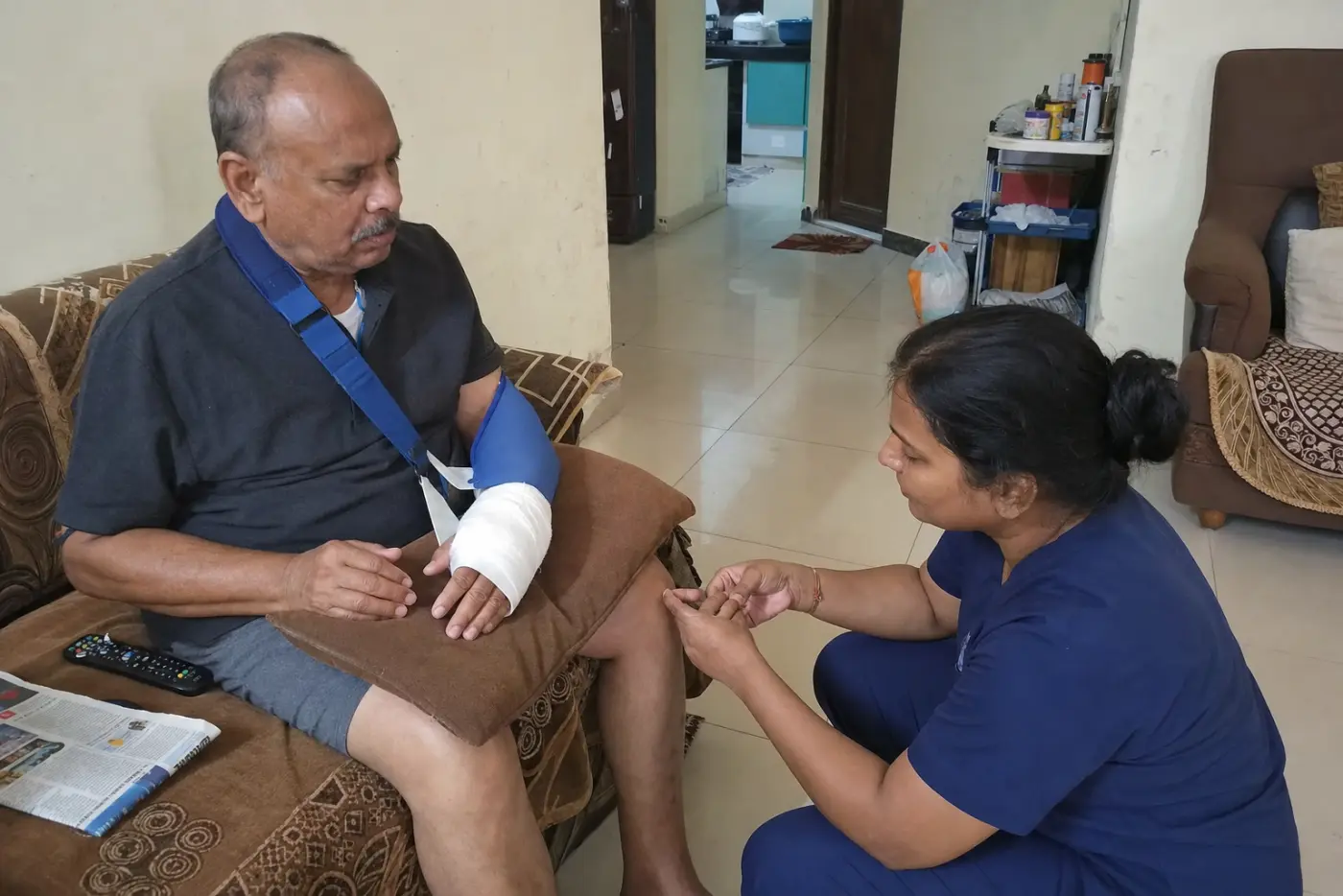
A wrist or shoulder that's swollen, bruised and still sore the next day needs an X-ray. Wrist and shoulder fractures after a fall are very common in older people, and many are treated with a cast or a sling. If you're not sure whether it's broken, our guide on telling a fracture from a sprain goes through the signs.
Can a doctor see them at home?
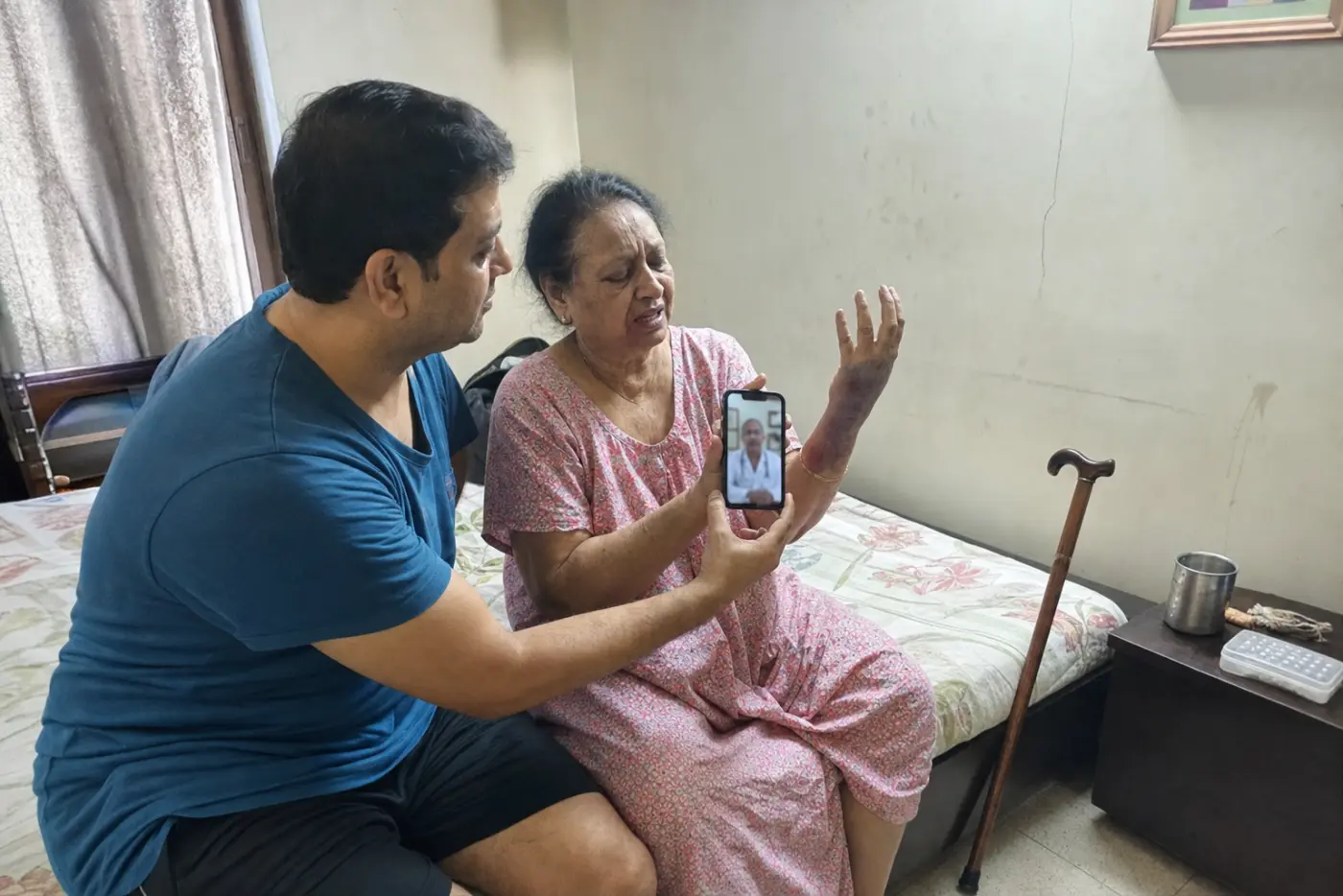
If they're in Bangalore or Pune, none of the warning signs apply, and getting them to a hospital is hard, yes. With fracture care at home, a doctor sees the injury on a video call between 8am and 8pm and, if it's needed, sends a technician with a portable X-ray machine. An orthopaedic doctor reads the X-ray and decides whether it's a cast at home, a sling, or a hospital.
If you're worried about an X-ray with grandchildren in the house, here's why it's safe for everyone else. If their own doctor has already asked for an X-ray, you can book an X-ray at home in Bangalore or in Pune on its own.
Why did they fall?
Once the scare is over, this is the question worth the most time, because someone who has fallen once is more likely to fall again. Tell their regular doctor about the fall even if there was no injury.
Things doctors usually look at:
- their medicines, especially new blood pressure tablets, sleeping tablets or diabetes medicines, and how many they take altogether
- dizziness on standing up, which is common when getting out of bed quickly at night
- eyesight, including old glasses and cataracts
- weak legs or poor balance
- footwear, like loose chappals, slippers without a back, or socks on a marble floor
Then look at the house. Loose rugs and doormats, a dark corridor between the bedroom and the bathroom, a wet bathroom floor, the raised step at the bathroom door. A plug-in night light and a mat that grips cost very little.
A fall is also often the first sign that bones have thinned. After a wrist or shoulder fracture from a simple fall, many doctors suggest a bone density scan. Ask about it at the orthopaedic review or with their regular doctor.
What if it's a broken hip?
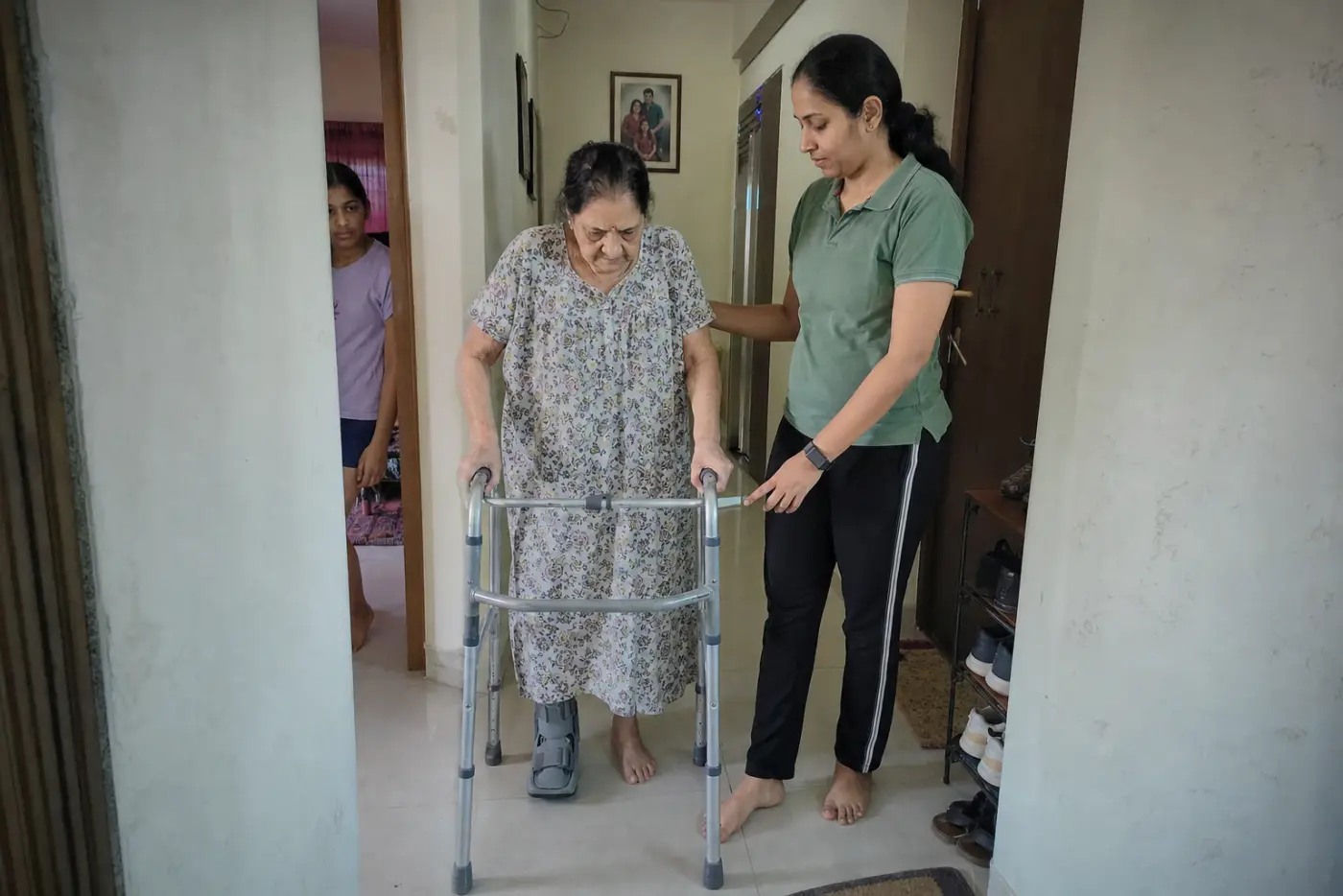
Most hip fractures in older people are treated with an operation, so the first stop is a hospital. The weeks afterwards are a lot of work for the family, and our guide to hip fracture recovery at home covers them. Once they're home, the follow-up X-rays, reviews and physio can come to the house.
Questions that come up a lot
Should I lift an elderly person after a fall?
Don't lift them by the arms. If they aren't hurt, help them roll onto their hands and knees and get up using a sturdy chair. If they're hurt or can't get up, keep them warm and call for help.
When should I call an ambulance after an elderly person falls?
Call 108 if they hit their head and are confused or drowsy, have neck, back, hip or groin pain, can't stand, have a limb that looks out of shape, or fainted before the fall.
Should an older person see a doctor after a fall if they seem fine?
Yes, at least tell their regular doctor. If they hit their head while on a blood thinner, get them checked at a hospital the same day. A faint or dizzy spell before the fall needs a doctor too, because the reason for the fall matters as much as the injury.
Seri shares general guidance and isn't a substitute for a doctor. If someone is unconscious, not breathing normally, can't stand after a fall, or has a head, neck, back or hip injury, call 108.