Hairline Fracture: Treatment and Healing Time
"It's only a hairline fracture" is one of those phrases that sounds reassuring and confusing at the same time. Only? It's still a broken bone. So does it need plaster? Can you walk on it? And why does it still hurt three weeks on?
What is a hairline fracture?
It's a thin crack in a bone where the pieces haven't moved out of line. You'll hear it called a hairline fracture, a crack, or an undisplaced (or non-displaced) fracture, and they all mean roughly the same thing. An X-ray report might say "undisplaced fracture" or "fracture line without displacement".
A stress fracture is a kind of hairline fracture that comes from repeated strain rather than one injury. Think of someone who suddenly starts walking or running a lot more than usual, or a new recruit on long marches. They're most common in the bones of the foot and the shin. Older people with thin bones can get them from ordinary walking.
Is a hairline fracture serious?
Usually it's less serious than a break where the bone has shifted, because the bone is still lined up and tends to heal well if it's protected. But it is still a fracture. Using it hard too soon can widen the crack or let the pieces move, and then it may need longer in a cast, or occasionally surgery.
A few places heal more slowly because their blood supply is poorer. The best-known is a small bone in the wrist near the base of the thumb, and there are some in the foot too. Doctors tend to be more cautious with these, even when the crack is tiny.
A hairline crack in the hip, pelvis or thigh still needs a hospital, however small it is.
How do I know if it's a hairline fracture?
The signs overlap with a sprain. There's pain on one spot of the bone when you press it, some swelling, sometimes a bruise. With a stress fracture the pain often builds over days or weeks, gets worse with activity and eases with rest. Plenty of people keep walking on it or using the hand for a week or two before getting it checked, because it didn't seem bad enough. If you're trying to work out what you're dealing with, our guide on whether it's broken or just a sprain goes through the signs.
Why didn't my hairline fracture show on the X-ray?
Thin cracks can be hard to see in the first few days, especially in the wrist and the foot. Once the bone starts healing, the line usually gets easier to see. So if the doctor suspects a fracture from where and how it hurts, they'll often treat it as one anyway, with a splint or cast, and repeat the X-ray in a week or two. Now and then they'll ask for an MRI or CT scan at a hospital.
Needing a second X-ray doesn't mean the first one was badly done. A radiologist reading proper digital images, whether they were taken at home or in a hospital, is still how most of these are found. There's more on how home X-rays compare with hospital ones. If repeat X-rays worry you, an X-ray of a hand or foot is a very small dose, and we've put the radiation numbers in plain terms.
Will it be a cast, a splint or a boot?
It depends where the crack is, how sure the doctor is, and how much the person needs to use that part.
For the wrist and hand, it's usually a splint or a plaster cast. A suspected break at the base of the thumb is often put in a cast or splint even before an X-ray confirms it. A cracked finger is sometimes just strapped to the finger next to it.
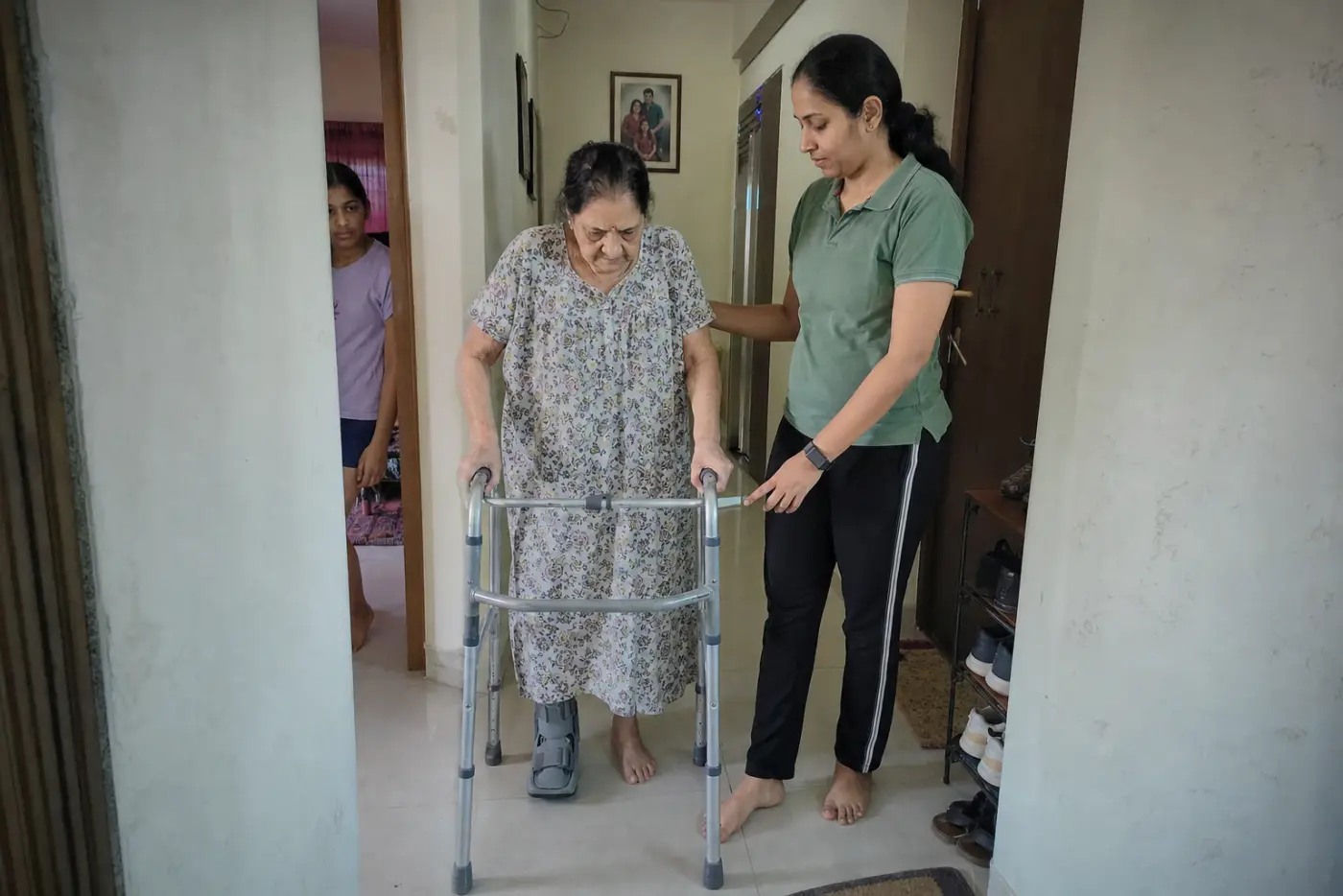
For the ankle and foot, it's often a walking boot (a removable boot with a stiff frame) or a cast, with crutches or a walker for a while. Some foot fractures only need a stiff-soled shoe.
Broken ribs aren't put in a cast at all. They're treated with pain relief and breathing exercises.
In day-to-day terms, a cast can't come off, so it holds the bone best, but it can't get wet and it itches. A boot can come off for washing and sleeping if the doctor allows it, which only works if it actually goes back on. A splint sits somewhere in between and is often used for smaller cracks, or while the swelling settles before a cast.
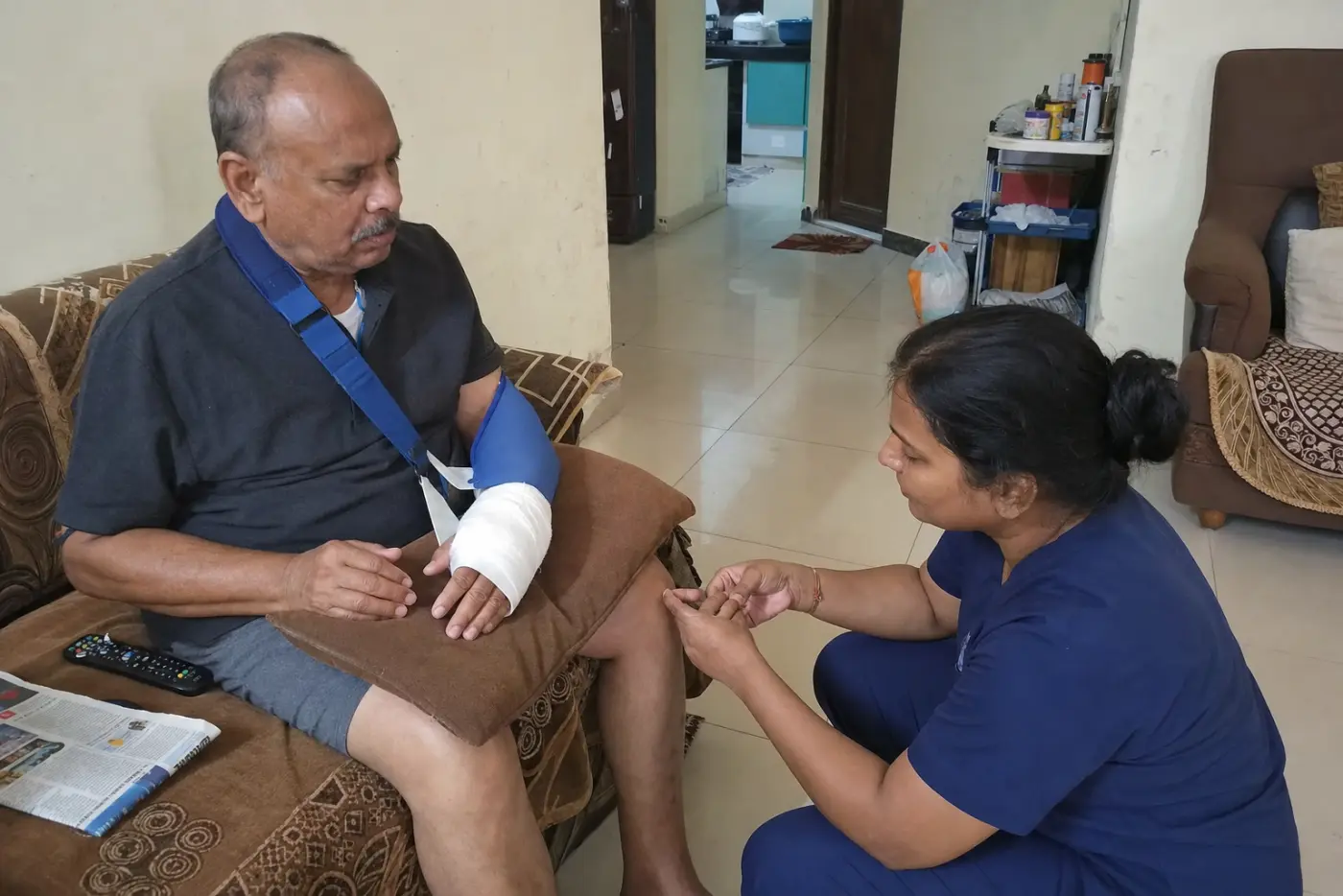
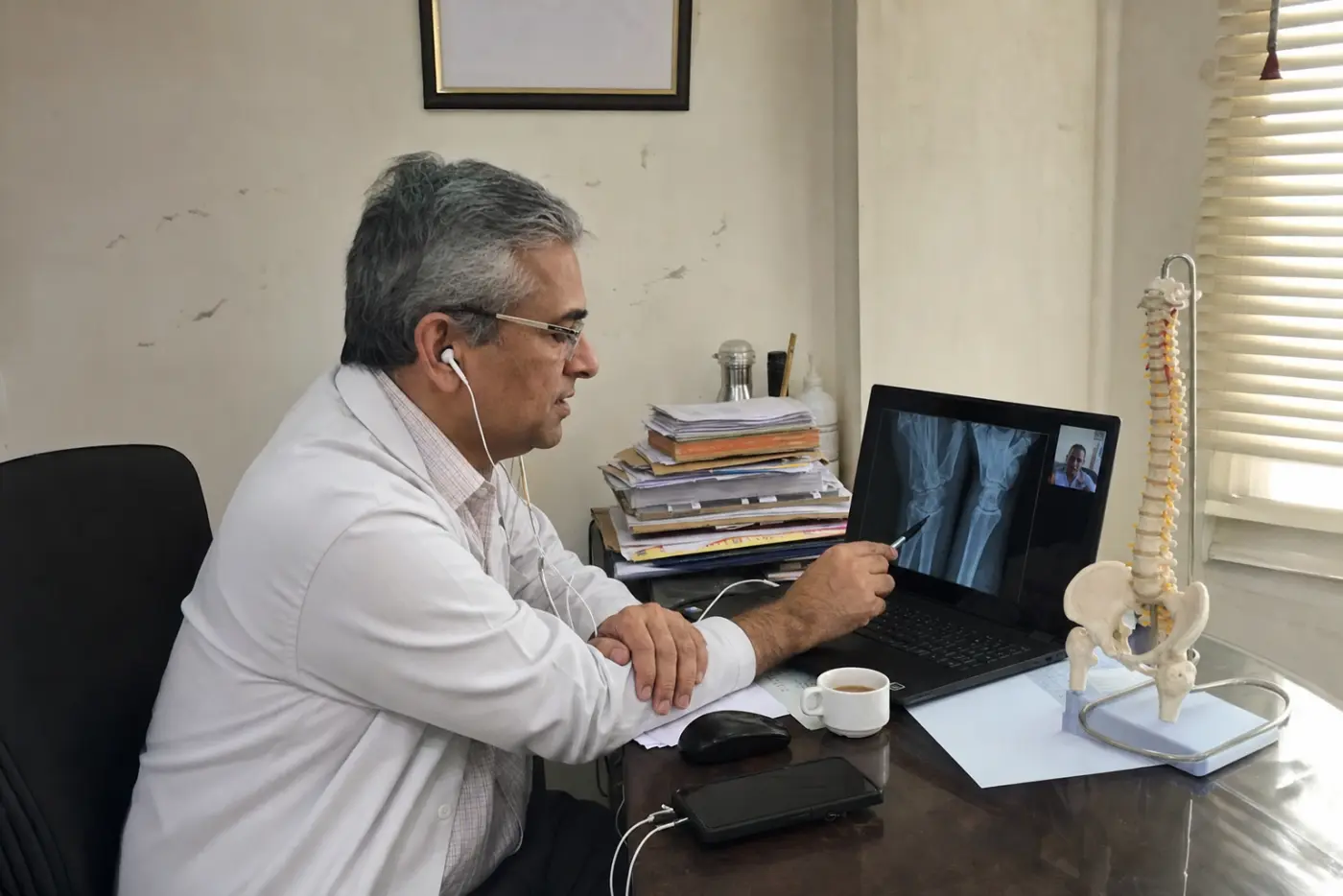
Most hairline fractures of the wrist, hand, foot and ankle can be managed without a trip to hospital. With fracture care at home in Bangalore and Pune, a doctor sees the injury on a video call, the X-ray is taken at home, and an orthopaedic doctor reads it and decides between a cast, a splint and a boot. They also set a check X-ray for a few weeks later. If you already have a prescription for the X-ray, you can book an X-ray at home in Bangalore or in Pune directly.
How long does a hairline fracture take to heal?
Many hairline fractures of the hand, wrist, ankle and foot get around six weeks of protection in a cast, splint or boot. Some heal a bit faster. Stress fractures of the foot or shin can take longer, and getting back to running can take a couple of months or more. Older bones and bigger bones usually need longer. So do people who smoke, people with diabetes, and anyone who keeps using the injured part before it's ready.
The pain often settles before the bone has fully healed, and that catches people out. They feel fine at three weeks, take the boot off, and set themselves back. The orthopaedic doctor decides when the protection can stop, from how it feels and from the check X-ray. After that the joint will be stiff for a while, and some people need physio to get their movement and strength back.
Is there anything that helps it heal?
Mostly time and protection. Wear the cast, splint or boot the way you were told, and keep the joints that aren't in it moving. If you smoke, this is a good reason to stop, at least until it's healed. Eat enough protein, and ask the doctor whether calcium or vitamin D would help rather than starting them on your own. Hold off on massage or hot oil over the injured spot.
With a stress fracture, the cause matters as well. A sudden jump in walking or training, worn-out shoes, or thinning bones can be behind it, and sorting that out is what stops it coming back.
If you do end up in plaster, our guide on looking after a cast at home covers keeping it dry, the itching, and the signs that it's too tight.
Questions that come up a lot
Can a hairline fracture heal on its own?
The bone heals by itself, but it needs protecting while it does, usually with a cast, splint or boot and rest. Left unprotected, the crack can widen or heal badly.
Can I walk on a hairline fracture in my foot?
Only as much as the doctor allows. Some foot fractures can take weight in a walking boot. Others need crutches for a while.
Does a hairline fracture need a cast?
Not always. Depending on the bone, it might be a cast, a splint, a walking boot or a stiff-soled shoe. The orthopaedic doctor decides from the X-ray.
How long does a hairline fracture take to heal?
Often around six weeks for the hand, wrist, ankle or foot. Stress fractures, older bones and bigger bones can take longer, and a check X-ray shows when it has healed.
Seri shares general guidance and isn't a substitute for a doctor. A possible hip, pelvis or thigh fracture needs a hospital. If a hand or foot is cold, pale or numb, or the pain is severe, go to a hospital or call 108.